
Ingredient spotlight
Cocoa Butter
The chocolate-making fat that gives balm a firm, velvety backbone.
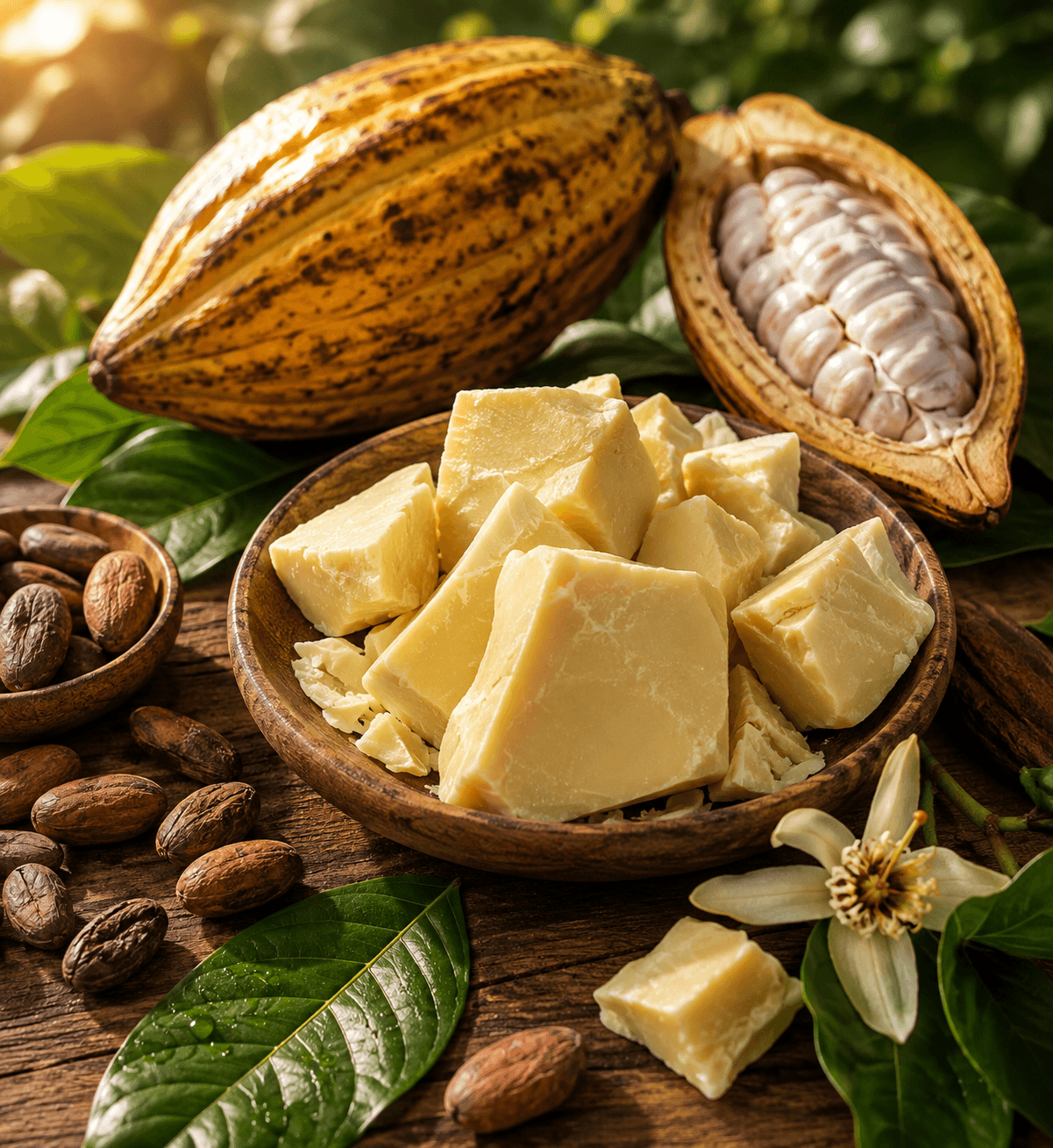
Cocoa butter is the pale-yellow fat pressed from cacao beans, Theobroma cacao. It is famous because chocolate depends on it, and the same melt behavior that matters in chocolate also makes it useful in balms.
Its fatty-acid profile is dominated by stearic, oleic, and palmitic acids. That combination helps cocoa butter stay firm at room temperature, melt smoothly near body temperature, and bring a polished, velvety feel to an oil-and-wax formula.
Why it matters
Cocoa butter adds firmness with a smooth melt.
Firm structure
Cocoa butter is harder than shea butter, so it helps give a balm more body and a cleaner edge in the tube.
Body-temperature melt
Its melting behavior is part of why cocoa butter feels solid at first, then softens into a smooth application.
Stable fat profile
The stearic, palmitic, and oleic acid balance contributes to cocoa butter's stability and its long history in food, cosmetic, and pharmaceutical preparations.
Why BennyBee uses it
We use cocoa butter when a balm needs a more polished, structured feel. Shea gives creamy cushion; cocoa butter brings firmness and that satisfying smooth melt.
It helps the formula feel substantial and smooth, especially when balanced with beeswax, coconut oil, castor oil, and softer plant oils.
How it contributes to the formula
Cocoa butter works as a solid butter in the oil phase. It supports firmness, improves the melt profile, and gives the finished balm a dense, velvety glide with a polished oil-butter balance.
- Botanical source
- Theobroma cacao bean fat
- Texture role
- Firm velvety body
- Key chemistry
- Stearic, oleic, palmitic fats
In the shop
Products with Cocoa Butter
These are the active BennyBee products currently connected to this ingredient in the catalog.
