Ingredient spotlight
Chamomile
A familiar flower with more chemistry than its quiet reputation suggests.
Chamomile is the common name for several daisy-family plants, but German chamomile, Matricaria recutita, is the species most often discussed in skin care research. The dried flower heads are used for teas, extracts, and botanical infusions.
What makes chamomile interesting is its specific plant chemistry. The flower contains flavonoids such as apigenin and essential-oil constituents including alpha-bisabolol. During processing, matricin can form chamazulene, the blue compound associated with chamomile oil.
Why it matters
Chamomile is more than a familiar flower name.
Recognizable species
German chamomile is an annual plant in the Asteraceae family. It is one of the best-known chamomile species used in herbal and cosmetic contexts.
Aromatic compounds
Alpha-bisabolol and chamazulene are two compounds that give chamomile a more specific ingredient story than generic flower extract language.
Infusion-friendly
Dried chamomile flowers can be infused into oils, making the botanical a good fit for an oil-based infusion.
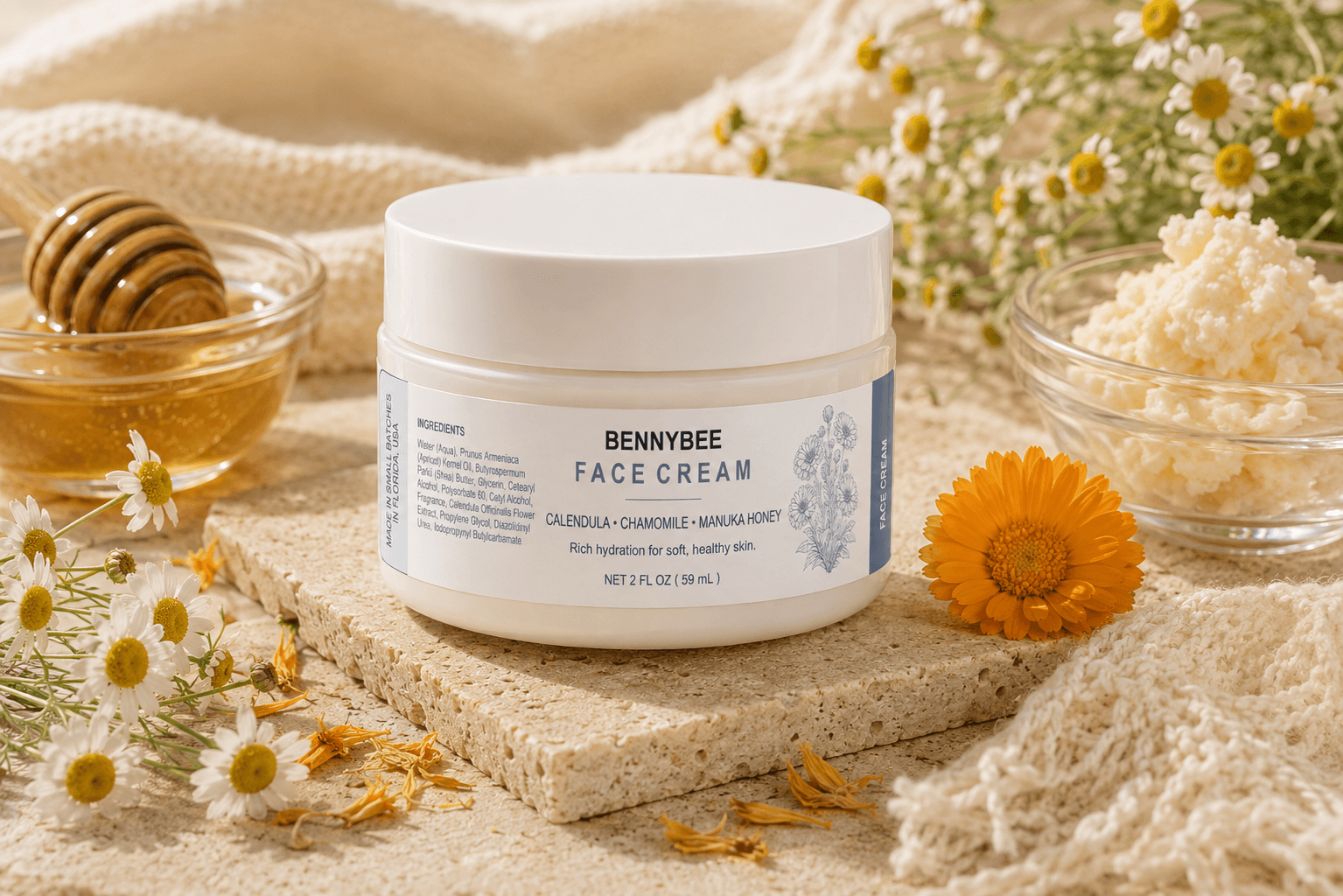
Why BennyBee uses it
We use chamomile when a formula needs a flower-infused oil story that feels quiet, familiar, and specific. It pairs naturally with calendula because both botanicals can be prepared through slow oil infusion.
The value is in the combination of sensory familiarity and real plant chemistry. Chamomile gives selected BennyBee formulas a botanical point of view with grounded cosmetic language.
How it contributes to the formula
In an oil-based product, chamomile belongs in the infused oil phase. It adds a recognizable botanical identity and a soft, considered skin care feel while the waxes, butters, and carrier oils still provide structure, glide, and conditioning.
- Botanical focus
- Matricaria recutita
- Known for
- Bisabolol and chamazulene
- Formula role
- Botanical oil infusion
In the shop
Products with Chamomile
These are the active BennyBee products currently connected to this ingredient in the catalog.